Founders don’t have a tools problem, they have a systems problem. You’re drowning in apps, context switching, and “quick wins” that never add up. Headcount is frozen, coordination eats your calendar, and the work that should move the business stalls.
The fix isn’t another shiny app; it’s wiring a few artificial intelligence tools into one compact loop so execution scales while your creativity stays human. An example of this is an agentic ai system, an advanced, autonomous artificial intelligence capable of independently performing complex, goal-oriented tasks.
Here’s the play: connect artificial intelligence tools to capture one idea, draft first passes, route assets, publish using a LinkedIn content strategy, and feed your marketing newsletter. Then learn and improve automatically.
One flywheel, zero extra hires. The loop is simple:
Create → Automate → Distribute → Learn → Optimize → Repeat.
What Are Artificial Intelligence Tools? The AI Systems Flywheel Explained
Artificial intelligence tools are software that generate or transform content and decisions (text, images, code, routing) so teams spend less time coordinating and more time on judgment. In our flywheel, you wire a few of these tools into a compact loop…
Create → Automate → Distribute → Learn → Optimize → Repeat, so one idea becomes many outputs, and each lap makes the next one faster and smarter.
AI platforms are foundational for automating and optimizing digital marketing and SEO workflows. Generative AI has already shown material productivity upside at the firm and sector level, with major analyses projecting sustained labor-productivity gains as adoption rises.
Why does the flywheel work? Because AI strips out coordination drag. Context switching and interruptions carry real cognitive costs, research shows measurable “switching costs” and re-orientation time after interruptions. So shrinking handoffs and automating routine steps directly protects throughput.
At the org level, automation increases efficiency by letting people specialize in higher-value work without paying the usual coordination penalties, exactly the leverage founders need when headcount is constrained. And in real teams today, even with gen-AI time savings, fragmented workflows still burn hours; connecting tools into a single loop is where the remaining gains are unlocked. Many advanced SEO tools now include an AI mode, enabling real-time analysis, competitor insights, and strategic recommendations for ongoing optimization.
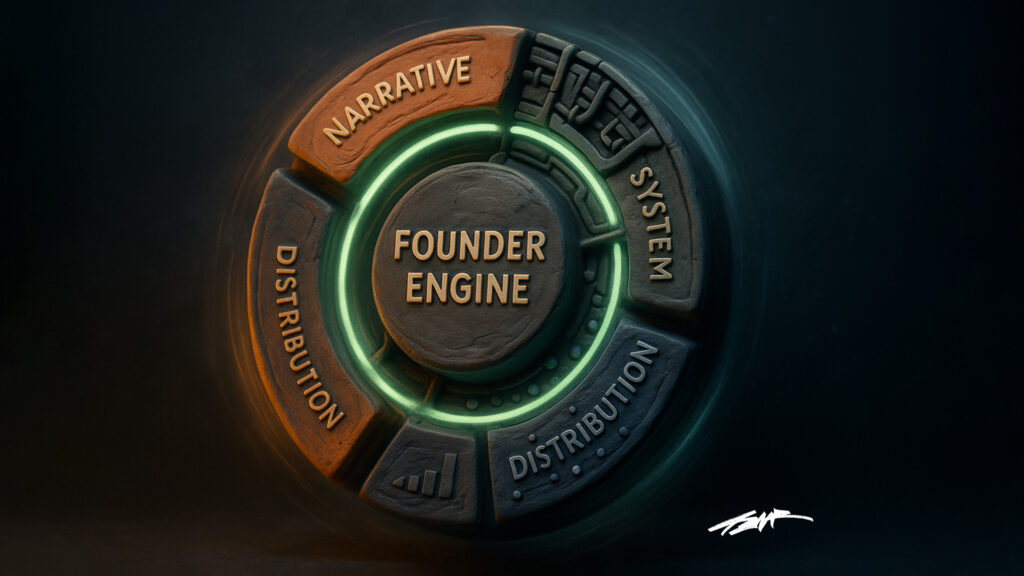
Founder still sets the POV. AI removes mechanical work (drafting first passes, tagging, scheduling, aggregating metrics); the founder keeps the voice, judgment, and standards. If you need the human narrative layer to plug into this loop, see our Founder Engine framework (internal). While most tools on the market offer some automation, only a few integrate seamlessly into a true flywheel system.
Why Founders Need Artificial Intelligence Tools Organized as Systems (Not More Apps)

Three pains you can’t hire your way out of right now:
- Manual work and context switching. Teams waste hours jumping between apps and handoffs. HBR’s large-scale log analysis found each application switch costs a little over two seconds, repeated hundreds of times per day…death by a thousand toggles. Asana’s 2025 updates echo the same: context switching erodes output and focus across knowledge work. AI tools can automate repetitive marketing tasks such as content creation, keyword research, and reporting, reducing manual effort.
- Low visibility into what’s working. Leaders know AI is here (Microsoft reports 75% of global knowledge workers now use gen-AI) but many orgs still lack a plan to turn individual wins into measurable business impact. Data stays fragmented across tools, so insights never loop back into execution. Analyzing data from sources like sales, inventory, and shipping is essential for transforming fragmented insights into actionable feedback.
- Tool sprawl with frozen headcount. The average enterprise now manages ~275 SaaS apps, and IT controls a shrinking share of that spend. Coordination overhead climbs while hiring stays tight. Gartner guidance to HR leaders is blunt: AI will automate routine tasks, letting the same team produce more if you redesign work around systems.
Systems replace coordination, not creativity. Wiring a few artificial intelligence tools into one loop…
Create → Automate → Distribute → Learn → Optimize → Repeat, removes mechanical steps (drafting first passes, routing, scheduling, aggregating metrics) so founders keep the POV and judgment where it matters. AI systems can perform tasks autonomously, reducing the need for manual intervention and allowing teams to focus on higher-value work. That’s also where the macro upside shows up: McKinsey estimates gen-AI–enabled automation can add 0.5–3.4 pp to annual productivity growth as adoption matures.
Bottom line: organize your AI as a system and you scale without hiring. More output and tighter feedback with the same team.
The 4 Core Loops Using Artificial Intelligence Tools
Create — Turn One Idea into Assets with AI SEO Tools and Drafting Models
Inputs: a 15–30-minute recording, a brief, or transcripts.
How: use AI SEO tools to generate outlines/briefs, then draft with GPT/Claude/Notion AI. Studies and practitioner tests show AI speeds brief creation and first-pass structuring so humans can focus on E-E-A-T and specificity. Notion AI and similar tools can also help brainstorm ideas and generate creative solutions to enhance productivity.
Output path: one idea → outline → LinkedIn post/carousel → short note for your marketing newsletter → marketing content such as blog thumbnails or social media posts.
Tool examples (non-exhaustive): Notion AI for structure, GPT/Claude for first drafts, MarketMuse/other brief tools for SERP-aware outlines.
Automate — Light Automations with Artificial Intelligence Tools (Make / n8n as the Glue)
Route once, reuse forever: when a draft is tagged “Approved,” your workflow should (1) push it to the scheduler, (2) archive the live URL, and (3) log metrics to a sheet/Notion for review. Platforms like Make (and alternatives like n8n) connect these steps so you remove handoffs without adding headcount. Keep orchestration minimal; one clean route beats a brittle Rube Goldberg.
Distribute — From LinkedIn Content Strategy to Marketing Newsletter with AI Tools for Marketers
Cadence: post 3–5× per week on LinkedIn (weekday, mid-morning/lunch slots tend to overperform), then publish a Friday recap marketing newsletter that expands your best idea.
Tools: Taplio for LinkedIn scheduling/analytics; Beehiiv for newsletter publishing, boosts and referrals to grow owned audience. Well-designed landing pages are crucial for capturing leads and conversions from these distribution channels.
One idea → many assets: publish the nucleus post on LinkedIn, then repurpose to Shorts/clips and a Beehiiv breakdown. AI tools can quickly create and optimize a landing page for each campaign, ensuring higher conversion rates. Re-surface winning posts after a cool-off window with a stronger hook and new timing; a growing body of practitioner evidence supports reposting as a reach multiplier when you iterate on the opener and visuals.
AI-driven tools can also help manage and optimize ad campaigns across platforms, including integration with Google Ads for paid distribution.
Learn — Metrics & Feedback Loops That Compound LinkedIn Growth
What to track: comments/views ratio (intent), saves, profile visits, site clicks, and newsletter sign-ups. Use Taplio’s analytics to flag outliers, then log topic + hook pattern in Notion for iteration. Incorporate rank tracking tools to monitor keyword positions and search visibility over time. Leverage sentiment analysis to understand audience reactions and improve engagement. Conduct regular site audits to identify technical issues and optimize website performance.
Cycle: Identify (top-quartile performers) → Refine (sharper hook + concrete example) → Repost in 14–28 days at a new slot; fold the winner into your marketing newsletter and short-form video plan. Frequency and consistency remain the biggest levers for sustained LinkedIn growth.
Net effect: using artificial intelligence tools to standardize these four loops removes coordination drag and lets the same team publish more, learn faster, and compound reach.
Case Snapshot — Output Up, Coordination Down with Artificial Intelligence Tools (No New Hires)
Before (typical founder team):
- 20–25 hrs/week lost to drafting, scheduling, and app switching across tools.
- Inconsistent publishing; newsletter paused; weak feedback loop.
- Tool sprawl (100–275 SaaS apps/org), little automation cohesion.
After (same headcount; wired as a system):
- −60–70% coordination time: drafts + routing handled by artificial intelligence tools and light automations (Make/n8n). Macro studies show this uplift is realistic as gen-AI scales.
- +2–3× weekly output: one idea → LinkedIn post/carousel → clips → marketing newsletter recap—repeatable. Posting 2–5×/week aligns with higher reach/engagement.
- List growth up via Beehiiv Boosts/referrals (predictable cost per engaged subscriber).
- Cleaner signal → faster iteration: 20-minute review locks in hooks that compound LinkedIn growth.
Best Practices for Building and Running AI Systems
Building and running effective AI systems starts with setting clear, measurable goals that align with your business objectives and the needs of your target audience. Before deploying any AI tools, define what success looks like, whether it’s higher search engine rankings, more efficient content creation, or improved engagement. Integrate search engine optimization (SEO) principles from the outset: use AI writing tools and generative AI models to produce content that’s not only high-quality but also optimized for search engines like Google.
Leverage platforms such as Google Search Console and leading SEO software to monitor your AI-generated content’s performance and identify opportunities for improvement. These tools help ensure your content creation process is data-driven and responsive to changes in search engine algorithms. While generative AI can accelerate content generation, it’s essential to maintain a balance with human intervention, reviewing, editing, and refining outputs to ensure they meet your brand standards and resonate with your audience.
Regularly update your AI systems to incorporate the latest AI models and advancements, such as Agentic AI, which can further automate and enhance your workflows. Continuous monitoring and optimization keep your AI-powered content generation competitive and relevant, ensuring your business stays ahead in a rapidly evolving digital landscape.
Customer Engagement with Artificial Intelligence Tools
Artificial intelligence tools are transforming how businesses engage with customers, making interactions more personalized, timely, and effective. By leveraging AI-powered solutions, you can optimize social media posts and web pages using advanced SEO tools, ensuring your content reaches a broader audience and ranks higher in search results. AI algorithms and machine learning models enable dynamic content optimization, tailoring messaging and offers to individual customer preferences and behaviors.
AI-powered chatbots and virtual assistants can handle routine inquiries, provide instant support, and recommend products or services, delivering a seamless customer experience with minimal human intervention. These tools not only improve response times but also free up your team to focus on more complex, high-value interactions.
With deeper insights into customer behavior (gathered through AI-driven analytics) your content strategy and marketing campaigns become more targeted and effective. Artificial intelligence enables you to identify trends, segment audiences, and personalize outreach, resulting in higher engagement and conversion rates. By integrating AI tools into your customer engagement strategy, you can build stronger relationships and drive sustained business growth.
Business Operations Enhanced by Artificial Intelligence Tools
AI tools are revolutionizing business operations by automating repetitive tasks and streamlining workflows across the organization. Adopting AI in your business processes leads to greater efficiency, reduced operational costs, and faster execution.
Ecommerce sites and social media accounts benefit significantly from AI-powered analytics and optimization tools, which help identify high-performing content, optimize product listings, and target the right audiences. Solutions like Otto SEO and Search Atlas provide actionable insights that drive smarter decision-making and improve overall business performance.
AI development and integration also enhance other critical business functions, such as supply chain management and customer service, by delivering real-time data and predictive analytics. As AI adoption grows, businesses that leverage these technologies gain a competitive edge, achieving sustainable growth and staying ahead of industry trends.
How to Build Your Flywheel with Artificial Intelligence Tools
- Audit one end-to-end content process -Map capture → draft → approve → schedule → publish → measure. Note where handoffs or app switching happen.
- Pick 3–4 artificial intelligence tools to cover capture → draft → queue → measure
Examples: GPT/Claude/Notion AI (draft/structure, all offer a free plan or free version to get started), Taplio (queue/analytics, free plan available), Make or n8n (routing, both have a free version), a simple sheet/Notion DB (metrics, Notion offers a free plan). As adoption rises, org-level productivity gains follow. - Connect your LinkedIn content strategy to a marketing newsletter (publish path) Ship 2–5 LinkedIn posts weekly; every Friday expand the week’s best idea into a Beehiiv marketing newsletter. Use Boosts/referrals for predictable list growth.
- Add a 20-minute weekly review tied to LinkedIn growth metricsTrack comments/views ratio, saves, profile visits, site clicks, subs. Identify top-quartile posts and log the winning hook/template for reuse.
- Improve one rule each month (hooks, timing, routing) Small changes compound. Microsoft’s Work Trend Index shows workers lean on AI to save time and focus on higher-value work, so codify those wins into your system.
Result: a compact loop—Create → Automate → Distribute → Learn → Optimize → Repeat that scales output with artificial intelligence tools, fuels your marketing newsletter, and compounds LinkedIn growth without adding headcount.
Common Mistakes with Artificial Intelligence Tools & Automations (and Fixes)
- Buying tools before defining outcomes → start with one process.
Tool sprawl without a clear job-to-be-done creates overhead and unclear ROI. Start with a single end-to-end flow (capture → draft → queue → measure) and prove value before adding more artificial intelligence tools. Industry surveys show automation ROI depends on narrowing scope and connecting steps, not piling on apps. Software Oasis+1 - Over-automating, under-measuring → commit to the weekly review.
Autonomous routing without measurement just moves chaos faster. Add a 20-minute review to log winners (comments/views, saves, profile visits, site clicks, subs) and tune hooks/timing monthly. Human-in-the-loop practices (clear roles, monitoring, user control) materially reduce risk and improve outcomes. tines.com+1 - Skipping repost windows → schedule 14–28-day improvements.
Reposting improved versions at new slots compounds reach without more creation. The lever isn’t volume; it’s iteration on the opener and example, what earns saves and replies. (Use your analytics to time the repost.) - Outsourcing the voice → founder owns hooks/POV; team packages.
Generative systems amplify what you feed them. Keep the founder’s point of view and standards at the edges; let automation handle the mechanical work. Studies find AI lifts creative output when humans actively steer how they use it, not when they abdicate the craft. MIT Sloan
“AI doesn’t replace the founder—it replaces friction.”
Competitive Advantage: How Founders Win with AI Systems
Founders who embrace AI systems and tools unlock powerful competitive advantages in today’s digital marketplace. By integrating AI capabilities such as machine learning and natural language processing, businesses can analyze customer behavior, preferences, and sentiment at scale…informing smarter decisions and more effective marketing strategies.
AI-powered platforms like Surfer SEO and Google AI Studio enable founders to optimize web pages for search engines, boost online visibility, and attract more qualified traffic. These tools help refine your brand voice, create engaging content, and ensure your messaging resonates with your target audience.
Staying up-to-date with the latest AI advancements allows founders to differentiate their businesses, respond quickly to market changes, and innovate continuously.
The Future: From Workflows to Agentic AI Systems for Founders
What “agentic ai” adds: systems that can monitor → decide → act across multi-step tasks with less prompting – planning, executing, and adapting to reach a goal (vs. today’s single-step copilots). Done well, this turns your flywheel from scheduled workflows into semi-autonomous cycles that launch, observe, and optimize campaigns on their own. solo.io+2Aerospike+2
Reality check: expect uneven maturity and vendor “agent-washing.” Gartner warns >40% of agentic AI projects may be scrapped by 2027 due to unclear value and data quality gaps, even as adoption rises. Translation: the tech is powerful, but success hinges on governance, clean data, and carefully scoped use cases. Reuters+1
Human-led guardrails (what to implement now):
- Clear constraints: define what agents can act on (channels, budgets, audiences).
- HITL checkpoints: require approval before irreversible actions (publishing, spend). Permit
- Operational monitoring: audit trails, rollback paths, and owners for exceptions. lenovoaiforgood.cio.com
Founder’s role doesn’t vanish, your POV sets the target. The next edge is a system where the founder’s narrative feeds the loop, artificial intelligence tools execute the mechanics, and agentic ai gradually handles more of the “decide and do” under strict, human-defined rules. Tec
Industry Trends in AI Systems for Founders
The AI landscape is evolving at breakneck speed, with new technologies and methodologies reshaping how founders approach growth and innovation. Agentic AI is emerging as a game-changer, enabling systems to autonomously make decisions and take action with minimal human input. Platforms like Model Context Protocol (MCP) are pushing the boundaries of what AI models can achieve, creating more sophisticated and human-like interactions.
The rise of free AI tools and human writing assistants is democratizing access to high-quality content creation, allowing founders to scale their output without sacrificing quality. AI-generated content and AI search results are becoming standard in digital marketing, while AI-powered marketing campaigns deliver more personalized and effective outreach.
To stay competitive, founders must keep a pulse on these industry trends, continuously exploring new AI tools, models, and platforms. By embracing innovation and integrating the latest AI advancements into their business strategies, founders can drive growth, improve efficiency, and maintain a leading edge in their markets.
Conclusion: Start Your Flywheel and Scale with Artificial Intelligence Tools
You don’t need a bigger stack; you need a tighter system. Wire a few artificial intelligence tools into one repeatable loop (Create → Automate → Distribute → Learn → Optimize → Repeat) and compound results every week. Same team, no new hires. One idea becomes multiple assets, your LinkedIn content strategy stays consistent, and your marketing newsletter grows an owned audience that pays off over time.
Follow us across social media for more AI Systems tips for founders and founder-led brands.