Founders create one piece of content and use it once. Winners create once, publish 15 times. The difference between struggling with LinkedIn consistency and dominating your industry feed isn’t creativity or time – it’s systems thinking applied to social media content creation.
To build an effective system, it’s important to understand the key elements of successful social media content creation systems—such as planning, repurposing, and distribution—that ensure your efforts are both efficient and impactful.
Most founders approach LinkedIn like a daily diary, scrambling to find something interesting to share each morning. They write a post, hit publish, then start the cycle again tomorrow. This reactive approach creates constant pressure while delivering inconsistent results. You’re essentially starting from zero every single day.
LinkedIn’s algorithm rewards frequent, high-quality posting. Creators who publish 5+ times weekly see exponential reach growth compared to occasional posters. But to create social media content daily requires 10-15 hours weekly – time most founders don’t have while building businesses. The math simply doesn’t work when you treat each post as a separate creative project.
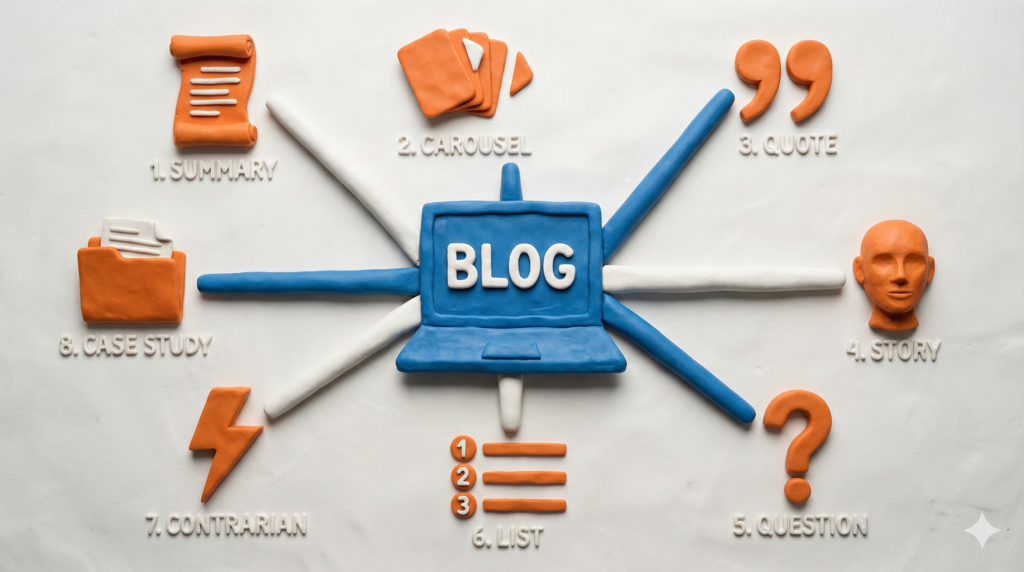
The solution isn’t working harder or hiring expensive content teams. Smart founders use content repurposing systems that transform single pieces of content into weeks of LinkedIn material. One well-researched blog post becomes 8 different LinkedIn posts. One podcast episode generates 5 unique pieces of social content. One newsletter creates 7 distinct LinkedIn publications.
These multiplication systems work because each piece of original content contains multiple insights, frameworks, stories, and perspectives that audiences consume differently. Some people prefer quick tips, others want deep frameworks, and many respond to personal stories. Repurposing lets you serve all audience preferences while maximizing your content investment.
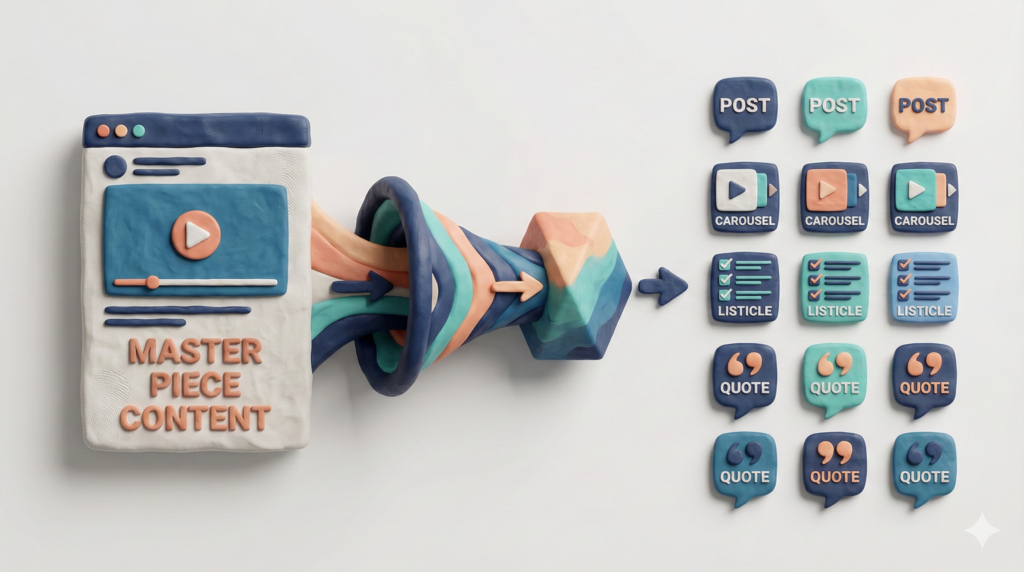
The goal isn’t to spam LinkedIn with recycled content, it’s to systematically extract maximum value from your best thinking while maintaining authentic engagement with your audience. A cohesive strategy ensures your content remains consistent, relevant, and engaging across all your posts.
The LinkedIn Content Volume Problem
Why LinkedIn Rewards Consistent Publishing
LinkedIn’s algorithm operates like a trust-building system that rewards creators who demonstrate consistent value delivery. The platform tracks posting frequency, engagement rates, and audience retention to determine whose content deserves broader distribution. Creators can measure success using these metrics—such as engagement rates and reach—to refine their content approach and align with their goals. Creators who publish sporadically get buried in feeds, while consistent publishers gain algorithmic momentum.
Algorithm favors frequent, engaged creators because LinkedIn prioritizes active community builders over occasional contributors. When you post regularly, the algorithm begins showing your content to larger audiences, testing engagement levels before deciding distribution reach. Inconsistent posting resets this trust-building process, forcing you to rebuild algorithmic credibility with each post.
5+ posts weekly drives exponential reach growth according to LinkedIn’s internal data and creator analytics. Creators who maintain this frequency see 3-4x higher reach than those posting 2-3 times weekly. The algorithm interprets frequent posting as serious platform commitment, rewarding it with increased visibility and suggested connections.
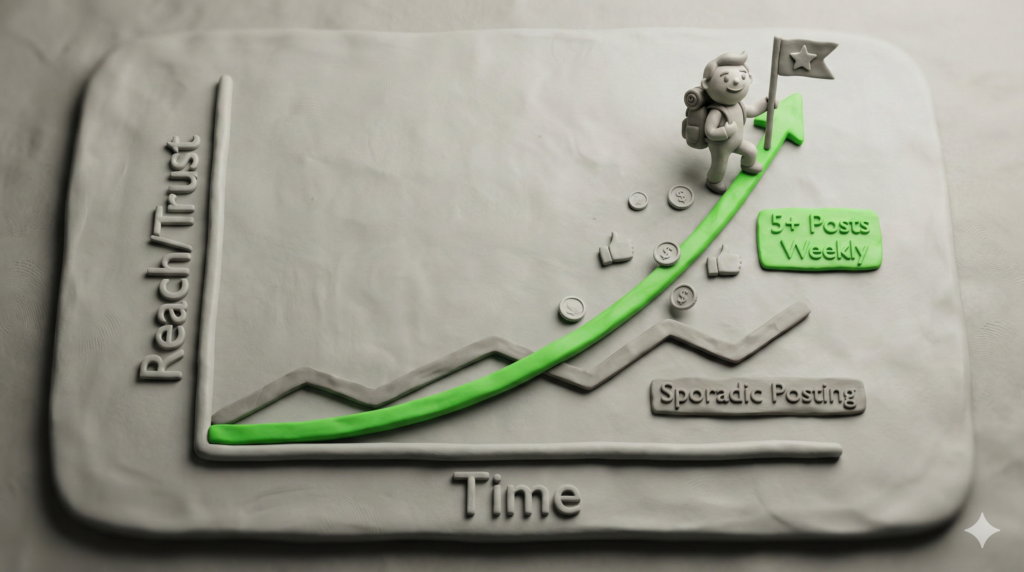
Thought leadership requires sustained content presence because audiences need repeated exposure to your ideas before recognizing expertise. One brilliant post doesn’t establish authority – consistent demonstration of insights over months does. Thought leadership develops through accumulating evidence of your thinking quality, which requires regular content publishing.
The Creator Burnout Trap
Most founders create content reactively instead of systematically, leading to inconsistent quality and messaging. They wake up thinking “I need to post something today” rather than executing planned content strategies. This reactive approach creates daily stress while producing random content that doesn’t build toward strategic goals.
Reactive creation means every post requires full creative energy: ideation, research, writing, and editing. This process consumes 30-45 minutes daily, totaling 3-4 hours weekly. For busy founders, this time investment competes with product development, sales, and strategic planning.
Daily posting pressure kills content quality because rushed creation prioritizes publishing over value delivery. When you’re scrambling for daily content ideas, you share half-formed thoughts, generic industry commentary, or promotional posts that don’t engage audiences. The pressure to publish something often results in publishing nothing valuable.
Context switching between creation and business kills productivity because content creation requires different mental energy than operational work. Moving from strategic planning to social media content creation fragments focus and reduces effectiveness in both activities. Most founders end up doing neither content creation nor business development well when they try to do both daily. Leveraging tools that act as a personal assistant can help founders manage their workload and stay organized, reducing the mental load of juggling multiple tasks.
The 5× Content Multiplication Framework (1,200 words)
Strategic content repurposing transforms single pieces of content into systematic LinkedIn presence without requiring daily creative energy. Each multiplication system extracts different value angles from your original content, serving various audience preferences while building consistent thought leadership presence. This article also includes practical tips for applying the 5× Content Multiplication Framework to maximize your social media content creation efforts.
System 1: The Blog-to-LinkedIn Ecosystem (One Blog = 8 LinkedIn Posts)
Blog posts contain multiple layers of value that can be extracted and reformatted for different LinkedIn audiences. Each blog becomes a content ecosystem that feeds your LinkedIn presence for 2-3 weeks, eliminating daily content creation pressure.
Main post: Blog summary with key insights serves as your primary LinkedIn content piece that drives traffic back to the full blog. Structure this as a 3-paragraph summary: hook with the main insight, key framework or strategy, and results or benefits readers can expect. Include 2-3 specific takeaways that provide immediate value even without reading the full blog.
Example: If your blog covers “Newsletter Growth Strategies,” your main post might open with “Most founders waste money on newsletter ads that stop working when budgets disappear” followed by the 4-stage flywheel framework and specific results like “One founder grew from 200 to 5,000 subscribers in 6 months without ad spend.”
Carousel post: Framework breakdown takes your blog’s main framework and presents it as a visual, swipeable guide. Break complex strategies into 8-10 slides that walk through implementation steps, examples, and common mistakes. Carousels generate 3x higher engagement than text posts and position you as someone who thinks systematically.
Structure each slide with a clear headline, 2-3 bullet points, and visual elements that support comprehension. Using engaging visuals, such as infographics or illustrations, is crucial to quickly capture attention and communicate complex information effectively, increasing audience engagement and reach. End with a slide promoting the full blog for readers who want deeper implementation details. This format works especially well for process-oriented content and strategic frameworks.
Quote graphics: Pullout insights with design identify the most shareable quotes from your blog and turn them into visual posts. Look for contrarian statements, surprising statistics, or memorable analogies that make people want to share and comment. These posts often go viral because they provide instant value in an easily digestible format.
Use tools like Canva to create professional quote graphics that match your brand colors and fonts. Include your photo or logo for brand recognition, but keep the design clean and text-readable on mobile devices. Quote graphics perform well because they require no additional context to provide value.
Personal story: Behind-the-scenes from blog research shares the human side of your content creation process. Discuss what inspired the blog topic, challenges you faced during research, or surprising discoveries that changed your perspective. Personal stories build authentic connections that pure strategy content cannot achieve.
Example: “I spent 3 hours yesterday analyzing why most newsletter growth advice fails. Turns out, 90% of ‘growth experts’ have never actually grown a newsletter past 1,000 subscribers. Here’s what I learned from founders who actually built 50K+ subscriber lists…”
Question post: Audience engagement from blog topic transforms your blog content into conversation starters that generate comments and build community. Ask specific questions related to your blog’s main theme, encouraging readers to share their experiences, challenges, or perspectives.
Effective question posts include context about why you’re asking, share your own experience first, and ask questions that have multiple valid answers. Avoid yes/no questions in favor of open-ended prompts that encourage detailed responses.
List post: Tactical steps from blog content extracts actionable advice from your blog and presents it as numbered lists or step-by-step guides. LinkedIn audiences love tactical content they can implement immediately, making list posts highly shareable and saved frequently.
Structure list posts with specific, actionable items rather than vague advice. Include timeframes, tools, or metrics where relevant. Example: “5 newsletter automation tools that save 10+ hours weekly: 1. Beehiiv for referral tracking, 2. Zapier for subscriber segmentation…”
Contrarian take: Challenge conventional wisdom from blog positions you as an independent thinker who questions industry assumptions. Use research from your blog to challenge common beliefs, providing evidence for alternative approaches that work better.
Contrarian posts generate high engagement through discussion and debate. Present your contrarian view with specific evidence rather than opinion, and acknowledge why the conventional wisdom exists before explaining why it’s incomplete or outdated.
Case study: Real example from blog research shares specific examples, results, or implementations from your blog content. Case studies provide social proof while demonstrating practical application of your strategies. Use real companies and metrics whenever possible to build credibility.
Structure case studies with clear before/after scenarios, specific strategies implemented, and measurable results. Include lessons learned or mistakes avoided to provide additional value beyond the success story itself.
System 2: The Video Content Amplification (One Video = 5 LinkedIn Posts)
Video content contains multiple value layers that can be extracted and reformatted for different consumption preferences. Not everyone watches videos, but most people will engage with video-derived content when presented in their preferred format.
Native video post with captions serves as your primary video content, optimized for LinkedIn’s algorithm preference for native uploads. Add captions for accessibility and mobile viewing, include a compelling thumbnail, and write a description that provides context and encourages engagement.
LinkedIn videos perform best when they’re 30-90 seconds long, start with a hook in the first 3 seconds, and include clear calls-to-action. The video should provide complete value without requiring external links or additional resources.
Key quote extraction with visual design pulls the most impactful statements from your video and creates quote graphics. Video content often contains spontaneous insights or particularly well-articulated explanations that work perfectly as standalone quotes.
Choose quotes that sound natural in text format and don’t require video context to understand. Add visual elements like your photo or brand colors to maintain consistency with your other content.
Behind-the-scenes preparation content shares your video creation process, equipment setup, or preparation routine. Many people are curious about content creation workflows, and this type of content humanizes your brand while providing value to aspiring creators.
Document interesting aspects of your video creation: research process, equipment choices, or lessons learned during filming. This content performs well because it satisfies curiosity while positioning you as someone who takes content creation seriously.
Audiogram with key insights highlighted extracts audio segments from your video and creates visual audiograms that work well on LinkedIn. Use tools like Wavve or Audiogram to create waveform animations with text overlays highlighting key insights. For even better results, consider using an amazing tool that removes background noise and enhances audio quality, making your audiograms sound professional and clear.
Audiograms work especially well for interview content, podcast clips, or educational segments where the audio provides value without requiring visual elements. They’re particularly effective for thought leadership content where your expertise comes through in spoken explanations.
Written summary for non-video audiences acknowledges that many LinkedIn users prefer reading to watching videos. Create detailed written summaries that capture your video’s main points, insights, and actionable advice in text format.
Structure written summaries with clear sections, bullet points for easy scanning, and specific takeaways that provide value without watching the video. Include a note about the video for people who prefer that format, but ensure the written version stands alone.
System 3: The Newsletter-to-Social Pipeline (One Newsletter = 7 LinkedIn Posts)
Newsletter content provides rich material for social media content creation because it’s typically well-researched, structured, and designed for audience value. Each newsletter edition can feed weeks of LinkedIn content while driving new subscribers.
Newsletter highlight reel summarizes your latest newsletter edition with key insights, statistics, and takeaways. Structure this as a “What’s inside this week’s newsletter” format that provides immediate value while encouraging subscription for deeper content.
Include 3-4 specific insights from the newsletter, use bullet points for easy reading, and end with a subscription call-to-action. This format works well because it demonstrates newsletter value while providing standalone social media content.
Subscriber success story features share examples of how newsletter readers have implemented your advice or achieved results. These stories provide social proof while building community among your subscribers and potential subscribers.
Always get permission before sharing subscriber stories, focus on specific results or implementations, and connect the success back to newsletter strategies. Success stories work well because they show real-world application of your content.
Weekly insight compilation extracts the most valuable insights from recent newsletter editions and presents them as curated wisdom. This format works well for evergreen advice that remains relevant beyond the original publication date.
Structure insight compilations as numbered lists or thematic collections that provide quick value. Include insights from multiple newsletter editions to maximize the value density of each post.
Reader question responses turn newsletter subscriber questions into LinkedIn content that benefits broader audiences. Many newsletter questions reflect common industry challenges that make excellent social media discussion topics.
Always anonymize questions unless you have permission to use names, provide comprehensive answers that help the original questioner and broader audiences, and encourage additional questions in the comments.
Newsletter growth behind-the-scenes shares your newsletter journey, growth strategies, or lessons learned from newsletter publishing. This content appeals to aspiring newsletter creators while demonstrating your expertise in content strategy.
Share specific metrics when appropriate, discuss challenges and solutions, and provide actionable advice that helps others succeed with newsletter growth. This content builds authority while helping potential collaborators or clients understand your expertise.
Industry trend commentary from newsletter uses research and insights from your newsletter to comment on broader industry developments. This positions you as someone who stays current with industry changes while providing valuable analysis.
Connect newsletter insights to current events, industry announcements, or market trends. Provide your unique perspective based on newsletter research while encouraging discussion about implications and opportunities.
Community highlight posts feature interesting discussions, insights, or connections that happen in your newsletter community. These posts demonstrate the value of joining your newsletter while building social proof through community engagement.
Share interesting community discussions (with permission), highlight valuable contributions from subscribers, and showcase the collaborative aspects of your newsletter community. When sharing content or insights from other creators as part of your community highlights, always credit the original creators and seek permission if needed.
System 4: AI Tools for Marketers Acceleration
Taplio is a great tool for automating posting schedules and optimizing content performance through AI-powered analytics and scheduling features. Configure Taplio to post your repurposed content at optimal times, track engagement patterns, and suggest improvements based on performance data.
Set up content queues that automatically space out your repurposed content to avoid overwhelming your audience. Use Taplio’s analytics to identify which types of repurposed content perform best with your specific audience, then optimize your multiplication systems accordingly.
ChatGPT prompts for content variation help create multiple versions of the same core content without manual rewriting. Develop prompt templates that transform blog insights into different LinkedIn formats: questions, lists, stories, or contrarian takes.
Example prompt: “Take this blog insight about [topic] and turn it into a LinkedIn question post that encourages audience engagement and discussion.” Create variations for each content type in your multiplication system.
Design tools for visual content creation streamline the process of creating quote graphics, carousels, and other visual content. Tools like Canva or Adobe Creative Suite can be configured with brand templates that maintain consistency across all repurposed content.
Consider using an ai powered tool to generate images or graphics for your social media content, which can help enhance branding and reduce reliance on stock images.
For accessible editing, PhotoShop Express is a free tool that offers a range of features for marketers looking for easy and affordable photo or graphic editing options.
Create templates for each type of visual content in your system: quote graphics, carousel slides, behind-the-scenes posts, and case study formats. Templates ensure consistency while reducing design time for each piece of content.
Analytics tools for performance optimization track which repurposed content types generate the best engagement, reach, and conversion metrics. Use LinkedIn analytics combined with Google Analytics to understand which content drives website traffic and business results.
Monitor performance patterns across different content types, posting times, and topics. Use this data to refine your multiplication systems, focusing on content formats that deliver the best results for your specific audience and business goals.
Platform-Specific Optimization Strategies
LinkedIn Algorithm Optimization
LinkedIn’s algorithm prioritizes content that generates meaningful engagement within the first hour of posting. The platform measures dwell time, comment quality, and sharing behavior to determine content distribution reach. Posts that receive immediate engagement from your network get pushed to broader audiences through LinkedIn’s recommendation system.
Posting time optimization varies by audience but generally performs best between 8-10 AM and 12-2 PM on weekdays when professionals check LinkedIn during commutes and lunch breaks. Test different posting times with your repurposed content to identify when your specific audience engages most actively.
Hook optimization in the first line determines whether users stop scrolling or continue reading. Start posts with contrarian statements, surprising statistics, or questions that create curiosity gaps. The first 125 characters appear in feeds without “see more” expansion, making this space critical for engagement.
Comment strategy within the first 30 minutes significantly impacts algorithmic distribution. Respond quickly to early comments, ask follow-up questions, and engage meaningfully rather than just thanking commenters. LinkedIn interprets rapid comment responses as high-quality content worth distributing widely.
Utilize sentiment analysis to monitor audience reactions to your posts, allowing you to refine your social media content creation for better engagement and more effective reputation management.
Connection targeting affects initial post visibility since LinkedIn shows content to close connections first. Build genuine relationships with industry leaders, potential customers, and thought leaders who actively engage with content. Their early engagement signals quality to the algorithm.
Content Format Performance Data
Carousel posts generate 3-5x higher engagement rates than single-image or text-only posts because they encourage multiple interactions per user. LinkedIn users swipe through carousel slides, creating multiple engagement signals that boost algorithmic reach. Carousels work especially well for frameworks, step-by-step guides, and before/after comparisons.
Video content receives 5x more engagement than text posts but requires higher production investment. Native LinkedIn videos perform better than external video links because they keep users on the platform. Videos under 60 seconds maintain highest completion rates, while 15-30 second videos optimize for mobile consumption.
Text posts with 150-300 words achieve optimal engagement by providing substantial value without requiring “see more” clicks. Longer posts can work for thought leadership content, but shorter posts generally receive more comments and shares from busy professionals. However, long form content such as in-depth articles or ebooks can establish thought leadership and authority, especially when covering complex topics in detail, even if they tend to have lower engagement rates.
Question posts drive 2-3x more comments than statement posts because they explicitly invite audience participation. Questions about industry challenges, tool recommendations, or strategic decisions generate valuable discussions while building community engagement.
Engagement Rate Maximization
Call-to-action optimization at the end of posts significantly impacts engagement behavior. Specific CTAs like “What’s your experience with this strategy?” perform better than generic “Share your thoughts” requests. Multiple CTA options (comment, share, save) give audience members different ways to engage based on their comfort level. Creating engaging content is central to driving audience interaction and maximizing engagement rates, as it encourages users to participate and connect with your message.
Content timing should align with your multiplication schedule to maintain consistent presence without overwhelming followers. Space repurposed content 24-48 hours apart to allow each post sufficient engagement time while maintaining regular posting frequency.
Engagement reciprocity builds relationships that improve long-term content performance. Actively engage with your network’s content, especially accounts that consistently engage with your posts. LinkedIn’s algorithm considers mutual engagement patterns when determining content distribution.
Hashtag strategy using 3-5 relevant hashtags increases discoverability without appearing spammy. Mix popular industry hashtags with niche-specific tags to reach both broad and targeted audiences. Avoid overly generic hashtags that create too much competition for visibility.
Implementation: 30-Day Content Multiplication System
Week 1: Foundation Setup (Content Audit & System Selection)
Content audit your existing materials to identify high-performing content suitable for multiplication. Review blog posts, videos, newsletters, and podcast episodes from the past 6 months, noting which pieces received the most engagement, comments, or business results. Prioritize evergreen content that remains relevant beyond original publication dates.
When targeting connections, engaging with business leaders can expand your reach and help establish your authority as a trusted expert in your industry.
Document content performance metrics including social shares, comments, website traffic, and any business inquiries generated. This baseline data helps predict which content will perform well when repurposed across multiple LinkedIn formats.
System selection based on your primary content creation strengths and available materials. If you publish weekly blogs, implement the Blog-to-LinkedIn Ecosystem first. Video creators should start with Video Content Amplification, while newsletter publishers benefit most from the Newsletter-to-Social Pipeline.
Set up necessary tools including Taplio for scheduling, Canva for visual content, and analytics tracking for performance measurement. Configure brand templates and posting schedules that support consistent content multiplication without daily management.
Week 2: Batch Content Creation
Batch creation of one week’s worth of repurposed content from a single source piece. If starting with a blog post, create all 8 LinkedIn variations during one focused content session. This approach maintains consistent messaging and tone while maximizing creative efficiency.
Schedule posts using Taplio or LinkedIn’s native scheduler, spacing them 24-48 hours apart to maintain engagement without overwhelming followers. Scheduling posts in advance streamlines your social media content creation process and helps save time. Include optimal posting times identified during your foundation setup phase.
Template development for recurring content formats ensures consistent quality and reduces creation time for future multiplication cycles. Create templates for carousels, quote graphics, and question posts that maintain your brand voice and visual identity.
Test your first week of repurposed content, monitoring engagement patterns and audience responses to identify which formats resonate most with your specific audience.
Week 3: Optimization & Performance Analysis
Performance analysis using LinkedIn analytics and any additional tracking tools to identify top-performing content formats, optimal posting times, and audience engagement patterns. Note which types of repurposed content generate the most comments, shares, and profile visits. When using ai generated content, regularly monitor its performance and originality to ensure quality and maintain authenticity.
Content optimization based on performance data by adjusting posting times, refining content formats, and improving call-to-action strategies. If carousel posts perform better than text posts, shift your multiplication system to emphasize visual content formats.
A/B testing different approaches to the same content helps optimize your multiplication systems. Test different hooks, content lengths, and engagement strategies to improve overall performance.
Document successful strategies and content formats that work best with your audience for future multiplication cycles.
Week 4: Scale & Automation Implementation
Automation setup using AI tools for marketers and scheduling platforms to streamline content multiplication. When selecting automation tools, consider whether a free plan or a monthly plan best fits your needs—free plans are ideal for startups to try out features, while monthly plans unlock premium capabilities and more credits for growing teams. Configure ChatGPT prompts that help generate content variations, set up automated posting schedules, and establish performance tracking systems.
Scale planning for sustainable long-term content multiplication by creating systems that don’t require daily attention. Develop quarterly content calendars that map source content to multiplication schedules, ensuring consistent LinkedIn presence without overwhelming your content creation capacity. To maximize results, create a dedicated landing page to capture leads and drive conversions from your repurposed content.
Establish quality control processes that maintain content standards while scaling output. Create review checklists and approval workflows that ensure all repurposed content aligns with your brand voice and business objectives.
Common Content Repurposing Mistakes
The Copy-Paste Trap
The biggest repurposing mistake is copying content directly across platforms without adapting format, tone, or context for each specific use. Many founders take a blog paragraph and paste it as a LinkedIn post, wondering why engagement stays flat. Direct copying ignores platform-specific audience expectations and consumption patterns.
LinkedIn audiences expect concise, actionable content optimized for professional networking. Blog content is typically longer, more detailed, and designed for focused reading. Simply copying blog sections creates posts that feel out of place and fail to generate meaningful engagement.
Effective repurposing requires transformation, not duplication. Extract key insights, reformat for platform consumption patterns, and adapt tone for social media interaction. The goal is creating native content that feels designed specifically for LinkedIn while leveraging your original research and thinking. When repurposing content, it’s also essential to maintain your own voice to ensure authenticity and authority across every platform.
Platform-Agnostic Content
Creating generic content that works everywhere often means it works nowhere particularly well. Each social media platform has distinct audience behaviors, content formats, and engagement patterns that require specific optimization approaches.
LinkedIn professional audiences engage differently with content than Instagram or Twitter users. They prefer industry insights, career advice, and business strategy content presented in professional formats. Generic motivational quotes or lifestyle content that works on other platforms often underperforms on LinkedIn.
Successful social media content creation requires platform-specific adaptation that considers audience expectations, optimal content length, visual requirements, and engagement behaviors unique to each platform. It is also important to produce thought leadership content tailored to each platform’s audience, sharing personal stories and insights that establish authority and inspire engagement.
Ignoring Engagement Optimization
Many founders treat repurposed content as set-and-forget publishing without monitoring performance or optimizing for engagement. They create content variations but don’t track which formats generate the best response or drive meaningful business results.
Engagement optimization requires analyzing performance data, testing different approaches, and refining content formats based on audience response. Without this feedback loop, repurposing systems produce content volume without strategic impact.
Monitor engagement patterns across different content types, posting times, and formats. Use this data to refine your repurposing approach, focusing resources on content formats that deliver the best results for your specific audience and business objectives. Treating engagement optimization as a critical marketing task ensures it receives the regular attention needed to improve your social media content creation strategy.
Conclusion: From Content Scarcity to Content Abundance
The four multiplication systems transform content creation from daily pressure into strategic advantage. The Blog-to-LinkedIn Ecosystem turns one blog into 8 LinkedIn posts. Video Content Amplification creates 5 posts from single videos. The Newsletter-to-Social Pipeline generates 7 posts per newsletter edition. AI tools for marketers acceleration automates optimization and scheduling across all systems.
This systematic approach beats constant creation because it maximizes the value of your best thinking while reducing daily content pressure. Systematic content multiplication also supports lead generation and helps develop effective business solutions by leveraging your content to attract potential clients and address industry challenges. Instead of scrambling for daily post ideas, you extract multiple perspectives from thoroughly researched content that already demonstrates value.
Repurposing also improves content quality because it builds on proven material rather than rushed daily creation. Your repurposed content benefits from the research, structure, and insights that made the original piece valuable, ensuring consistent quality across all LinkedIn posts.
The compound effect of multiplication systems means each piece of original content continues generating value weeks after publication, creating sustainable thought leadership presence that builds over time.
Ready to implement systematic content multiplication? Tellr’s Content Multiplication System provides the templates, workflows, and automation strategies that transform founders from content-stressed to content-abundant. Scale your LinkedIn presence without burning out on daily creation.
Introduction to Content Repurposing
Content repurposing is a powerful content marketing strategy that allows businesses to maximize the value of their existing assets by transforming them into new, engaging formats. Instead of letting high quality content gather dust after a single use, savvy marketers breathe new life into their best ideas, reaching new segments of their target audience and reinforcing their brand message across multiple channels. This approach not only extends the lifespan of your content but also helps improve your visibility on search engines, as diverse and regularly updated content is favored in search rankings.
By integrating content repurposing into your marketing strategy, you can consistently deliver relevant content that nurtures brand loyalty and keeps your audience engaged. Whether you’re turning a detailed blog post into a series of LinkedIn posts or converting a webinar into a set of short form videos, the key is to understand your target audience’s preferences and tailor each format to their needs. This strategic approach ensures your content marketing efforts are both efficient and effective, driving more leads, sales, and long-term business growth.
Identifying Content Gaps and Ideas
A successful content strategy starts with identifying content gaps and generating ideas that truly resonate with your target audience. This process involves analyzing your audience’s needs, pain points, and preferences to ensure your content creation efforts are focused and impactful. Social media listening tools are invaluable for monitoring industry trends, tracking competitor activity, and uncovering untapped opportunities in the market. By staying attuned to what your audience is talking about—and what your competitors might be missing—you can pinpoint content gaps that your brand is uniquely positioned to fill.
AI marketing tools further streamline the content creation process by providing actionable insights into audience behavior and content performance. These platforms can help you identify trending topics, automate content generation, and even suggest optimal posting times. By combining social listening with AI-powered analytics, you can develop a content calendar that addresses your audience’s most pressing pain points and keeps your brand top-of-mind. This proactive approach to content generation ensures your marketing strategy remains agile, relevant, and ahead of the competition.
Creating a Content Calendar
A content calendar is the backbone of any effective content marketing operation. It enables you to plan, organize, and schedule your content in advance, ensuring a steady flow of high quality content that aligns with your business goals and speaks directly to your target audience. By mapping out your content formats—such as blog posts, social media updates, videos, and infographics—you can maintain consistency across all channels and reduce the stress of last-minute content creation.
Tools like Google Sheets or dedicated content calendar software make it easy to collaborate with your team, track deadlines, and visualize your publishing schedule. A well-structured content calendar should include details such as content type, publication date, target audience, and desired outcomes for each piece. This level of organization not only saves time and reduces admin tasks but also helps you measure progress toward your content marketing objectives. Ultimately, a robust content calendar empowers your team to deliver the right message, to the right people, at the right time.
Content Repurposing for Different Formats
Content repurposing is all about transforming your existing content into a variety of engaging formats to reach a broader audience and boost your thought leadership strategy. For example, a single blog post can be reimagined as a series of social media posts, a short form video for Instagram Stories, or a visually compelling infographic. Similarly, a webinar recording can be edited into bite-sized video clips for LinkedIn posts or converted into a podcast episode, expanding your reach across multiple social media platforms.
AI powered content creation tools and video editing software make it easier than ever to produce high quality content in different formats, allowing you to maintain a consistent leadership strategy without overwhelming your team. By diversifying your content formats, you not only increase your brand’s online visibility but also cater to different audience preferences—whether they prefer reading, watching, or listening. This approach strengthens your thought leadership, drives more engagement, and positions your brand as a go-to resource in your industry.
Content Repurposing and ROI
Understanding the return on investment (ROI) of your content repurposing efforts is essential for optimizing your content marketing and overall marketing strategy. By leveraging analytics tools, you can track key engagement metrics—such as views, likes, shares, and comments—to evaluate the performance of your repurposed content across different formats and channels. These insights help you identify which types of content are most effective at engaging your audience and driving business results.
AI-powered tools can further enhance your ability to measure and predict ROI by analyzing historical data and forecasting the potential impact of new content formats. This data-driven approach enables you to refine your content strategy, allocate resources more efficiently, and focus on the content formats that deliver the highest value. By continuously monitoring engagement metrics and adjusting your marketing strategy accordingly, you can maximize the impact of your content repurposing efforts, improve marketing efficiency, and drive sustained revenue growth.